
 Destination guide
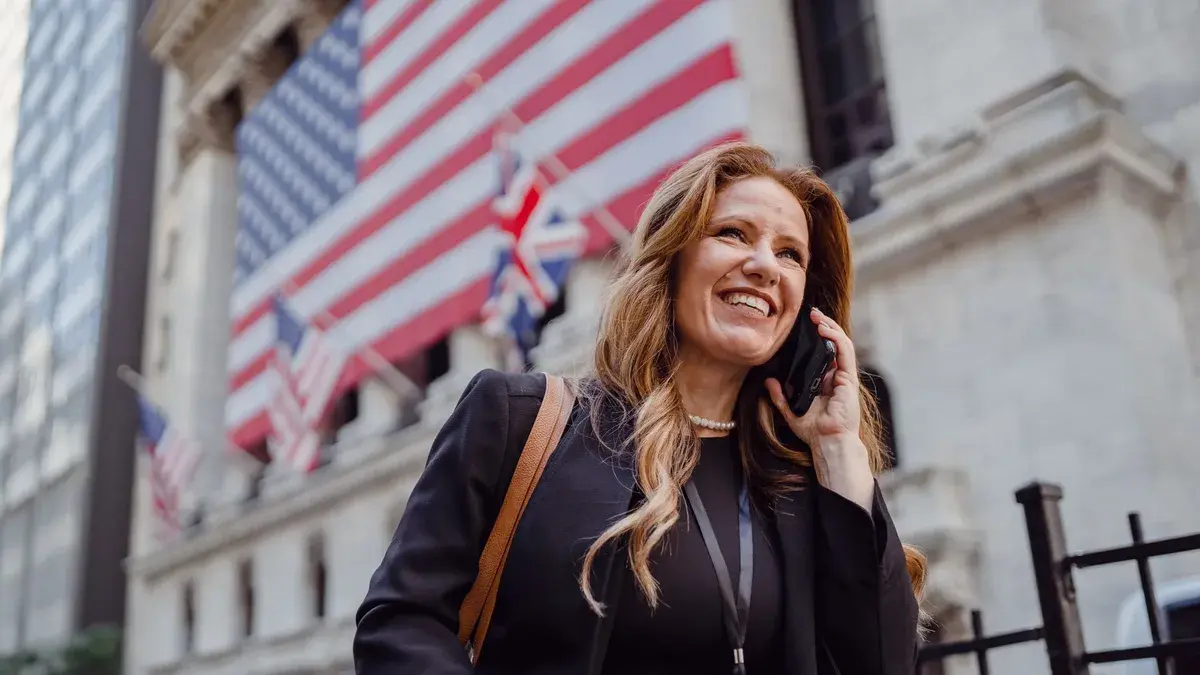
A US virtual number is an American phone line you rent online and read from your existing phone, without a US SIM card, a Social Security number or an American address. Almost everyone who looks for one is solving the same problem: a service will only send its code to a +1 number, and they do not have one.
Quick answer: a US virtual number is a real American number (+1) that receives SMS and voice calls, which you read in a web inbox. It is receive-only — you cannot send texts or place calls from it. At Atlas eSIM it costs from €7.90 for one month with no identity check. One detail decides whether it will work for you: it is issued from a local geographic range, not a mobile range, and some platforms treat those two differently.

Need an American line today? Get a US virtual number and start receiving codes within minutes.
How we built this guide
The honest version of this article is less flattering than the usual one, because the number type involved has a real consequence that most sellers leave out.
- Every capability claim comes from the live product data, not from marketing copy. Where the answer is no, it says no.
- The number type is stated plainly. This is a local geographic number. We say so in the second paragraph rather than burying it, because it changes which services will accept it.
- No guaranteed verification promises. No provider controls whether a platform accepts a number on a given day, and a guarantee would be dishonest.
- Prices are quoted as published and can change. Confirm the figure on the product page before buying.
Last checked: November 2026.
What a US virtual number actually is
A virtual American number is a genuine number from the North American Numbering Plan, allocated by a licensed carrier and routed to software rather than to a SIM card. The number is not simulated. A service looking it up sees an American number.
What differs is delivery. A conventional number terminates on a SIM inside a handset that must be physically present on a US network. A virtual number terminates in an inbox you open in a browser, from anywhere in the world. That is the entire mechanism, and it is why a US virtual number is useful to someone who has never set foot in the United States.
Local geographic range, not a mobile range
This is the most important paragraph on the page, so it is worth reading twice.
In many countries, mobile and fixed numbers sit in visibly different ranges — British mobiles start 07, Brazilian mobiles carry a leading 9. The United States does not work that way: mobile and landline numbers share the same area-code structure, and the difference lives in carrier records rather than in the digits. The Atlas American number is classified as local, which is the geographic category, not the mobile one.
For most purposes this changes nothing. American services are thoroughly used to landlines being used for two-factor authentication, because tens of millions of US households still have one. Banks, retailers, utilities, airlines and government portals generally accept a local number without complaint.
The exception is the set of platforms that specifically require a mobile line, and WhatsApp is the best-known example. That deserves its own section rather than a footnote.
The limit to understand before buying
A US virtual number at Atlas eSIM is receive-only. This decides whether the product fits your situation at all.
| Capability | Supported | What it means in practice |
|---|---|---|
| Receive SMS | Yes | Verification codes, one-time passwords and notifications land in your inbox. |
| Receive calls | Yes | Inbound voice reaches you, including automated voice-code callbacks. |
| Send SMS | No | You cannot reply. Anything needing a two-way exchange will not work. |
| Make calls | No | You cannot dial out. This is not an American business phone line. |
So if the plan is to run support from an American number, call prospects in Chicago or hold text conversations with customers, this is the wrong product and no setting will change that. If the plan is to receive — codes, confirmations, callbacks — it fits precisely.
Using a US virtual number with WhatsApp
This is where honesty costs a sale, so here it is anyway.
WhatsApp verifies new accounts with an SMS code and a voice-callback fallback. Your American virtual number can receive both, so the flow is mechanically possible. But WhatsApp applies anti-abuse checks that look at the number's classification, and a local geographic range is more likely to be refused than a mobile range. This number is a local range.
Four statements, all true at once:
- Reception is dependable — if a code is sent, it reaches your inbox.
- Acceptance is not guaranteed by us or by anyone else, because the decision is WhatsApp's alone.
- A local American range faces worse odds on WhatsApp specifically than a mobile range does.
- If WhatsApp is your main reason for buying, a mobile-range market is the better choice — a UK virtual number is a mobile range and costs about the same.
If you already have a working WhatsApp account and only need data while travelling, you may not need a second number at all — keeping your existing WhatsApp number on a travel eSIM is simpler and cheaper.

Why a code sometimes never arrives
When verification fails, the cause is usually one of four things.
- The platform rejected the classification before sending. You will typically see a message saying the number cannot be used for verification, rather than a delivery failure.
- The code went to voice instead of SMS. Some flows switch to a callback after a failed text. If your provider does not surface inbound calls, that code is lost.
- You requested too many codes. Rate limiting locks you out for hours. Waiting is the fix; retrying makes it worse.
- The number carries history. A recycled number may still be attached to an account nobody closed.
Who an American virtual number is for
Given the above, the people this genuinely serves are easy to identify.
People blocked by a country requirement. A US marketplace, bank, broker, streaming service or government portal demands a +1 number before letting you continue, and you are not in the United States. This is the cleanest fit, and these services overwhelmingly accept a local number.
Americans abroad. You left, and accounts at home still point at a number you no longer hold. A virtual line keeps those recovery paths open without maintaining a dormant plan. The same problem appears in reverse when you move abroad and want to keep your home phone number.
Travellers who want a separate line. You would rather codes arrive somewhere that is not your personal number. If you are also travelling to the United States and need connectivity, pair it with a US travel eSIM, which is a different product for a different job.
Who it is not for: anyone needing outbound contact, and anyone whose single reason for buying is WhatsApp verification.
What a US virtual number costs
Three terms are available, and none of them requires an identity document.
| Term | Price | Identity check | Included data |
|---|---|---|---|
| 1 month | €7.90 | None required | Not included |
| 3 months | €16.90 | None required | 1 GB, valid 7 days |
| 12 months | €44.90 | None required | 1 GB, valid 7 days |
The three-month term is the natural default: it costs roughly the same as two monthly renewals and it is the point at which the data allowance begins. The annual term is the right choice if the number will anchor account recovery, because losing the number means losing the recovery path.
One thing the table cannot show is availability. The American pool is far smaller than the British one, and a market with few numbers left can sell out between the moment you read a guide and the moment you reach the checkout. If the page shows the number you want, it is worth completing the order rather than returning to it later in the week.
Requiring no identity document is worth noting. Many providers of American numbers ask for proof of address, and some require a US address specifically, which defeats the purpose for anyone outside the country.
What you get after you buy
The sequence is short, and knowing it removes most of the uncertainty about whether a code will arrive in time.
You choose your number. Rather than being assigned whatever is next in the pool, you select from the available +1 numbers — which means you can pick an area code that suits you.
Allocation is immediate. No SIM is shipped and no porting window applies. When the order completes, the number is yours and the inbox is live. If a verification window is about to close, this is the part that matters.
You read everything in a browser. Incoming messages and call records appear in your account. Your own phone, number and SIM are untouched; the US virtual number sits alongside them rather than replacing anything.
The included data allowance
Terms of three months and longer include a data gift: 1 GB valid for 7 days, usable across 101 countries, the United States among them. The one-month term does not include it.
Be realistic about the scope. One gigabyte over a week covers maps, messaging and email on a short trip. It is not a travel data plan and will not survive streaming or tethering. Treat it as a bonus attached to the number, not a reason to buy one.
How to read and share a +1 number
American numbers are the simplest of the four markets in this cluster, but international formatting still trips people up.
A full American number written in international format looks like +1 212 XXX-XXXX: the country code 1, a three-digit area code, a three-digit exchange code and a four-digit line number. Ten digits after the country code, always.
The area code indicates where the number was issued. A handful of the well-known ones:
| Area code | Region |
|---|---|
| 212 | New York City |
| 213 | Los Angeles |
| 312 | Chicago |
| 305 | Miami |
| 415 | San Francisco |
For receiving verification codes the area code makes no practical difference — a code sent to a +1 number arrives whichever region the area code points to. It matters only when a human will read the number and draw conclusions from it.
Entering the number on a foreign platform
Give the number in full international format, with the country code and without the domestic long-distance 1 that Americans sometimes add when dialling. If the form has a country selector, choose the United States and then enter the ten digits with no spaces, dashes or parentheses.
A large share of failed verifications that look like provider problems are formatting problems: a digit dropped from the area code, or a number entered with a domestic prefix that international systems do not recognise. Copy the number exactly as it appears in your account rather than retyping it from memory.
How to choose a provider
Four questions separate a usable US virtual number from a frustrating one.
- What is the number's classification? Local, mobile or toll-free. If the provider will not say, assume the least favourable answer. This is the variable that decides the hardest verification cases.
- Does it surface inbound calls as well as SMS? Voice is the fallback for a large share of verification flows, and a text-only inbox loses those codes silently.
- What happens when the term ends? A number that lapses takes your account recovery with it. Know the renewal terms before the number becomes load-bearing.
- Is the number dedicated to you? Shared inboxes mean strangers can read codes sent to the same number. For anything tied to your identity, only a dedicated number is acceptable.
Five mistakes to avoid
Most bad outcomes come from a short list of avoidable decisions.
- Buying it mainly for WhatsApp. A local American range is the weakest of the four markets in this cluster for that specific job. Choose a mobile-range market instead.
- Making it your only recovery method. A rented number is a rented asset. Keep an email recovery route and an authenticator app where offered, so a lapsed term never locks you out.
- Buying a one-month term for a long-term account. If the number will anchor logins, a month is the wrong unit — you will forget the renewal before you remember the account.
- Requesting the code repeatedly. Each retry deepens the rate limit. Wait the stated interval, then try the voice option instead of a fifth text.
- Expecting to reply. The number receives; it does not send. Any workflow needing an outbound message or call will fail.
If the United States is not the country you need
The same logic applies elsewhere, with one important difference: not every market issues the same number type.
- A UK virtual number is a mobile range, which makes it the stronger choice when a platform insists on a mobile line.
- A Canadian virtual number shares the +1 prefix and the local classification, but is a separate market — a +1 number is not automatically American.
- A Brazilian virtual number is a mobile range, which matters in a country where WhatsApp is the default channel for almost everything.
Frequently asked questions
Can I use a US virtual number for WhatsApp?
You can attempt verification and the number receives both the SMS code and the voice callback, but this is a local geographic range and WhatsApp is more likely to refuse those than mobile ranges. No provider can guarantee the outcome. If WhatsApp is your main reason for buying, choose a mobile-range market such as the United Kingdom instead.
Can I send text messages from a US virtual number?
No. The number is receive-only: it accepts incoming SMS and calls and cannot send either. If you need two-way messaging, this product does not cover it.
Do I need an American address or ID?
No. The American offer requires no identity document and no US address or Social Security number. You choose your number and the line is allocated immediately.
Can I choose my area code?
You choose your number from those available, which in practice means choosing among the area codes in the pool at that moment. For receiving codes the area code has no technical effect.
Is this a real American number or an internet number?
It is a real number from the North American Numbering Plan, classified as a local geographic number. It is routed to software rather than a SIM, which is what lets you read it from abroad, but the number itself is genuine.
Can I receive bank verification codes on it?
Mechanically yes, and American banks are generally comfortable with local numbers because landline-based two-factor authentication is commonplace there. Some institutions refuse non-SIM numbers as a security measure, and that decision is theirs. Never make a virtual number the only recovery path for a financial account.
How quickly can I start receiving codes?
Within minutes of purchase. The number is allocated immediately and the inbox is available straight away; there is no SIM to ship and no activation window.
Ready to receive your codes on an American line? Choose your US virtual number.


 Destination guide

 Destination guide

 Destination guide