
 Destination guide

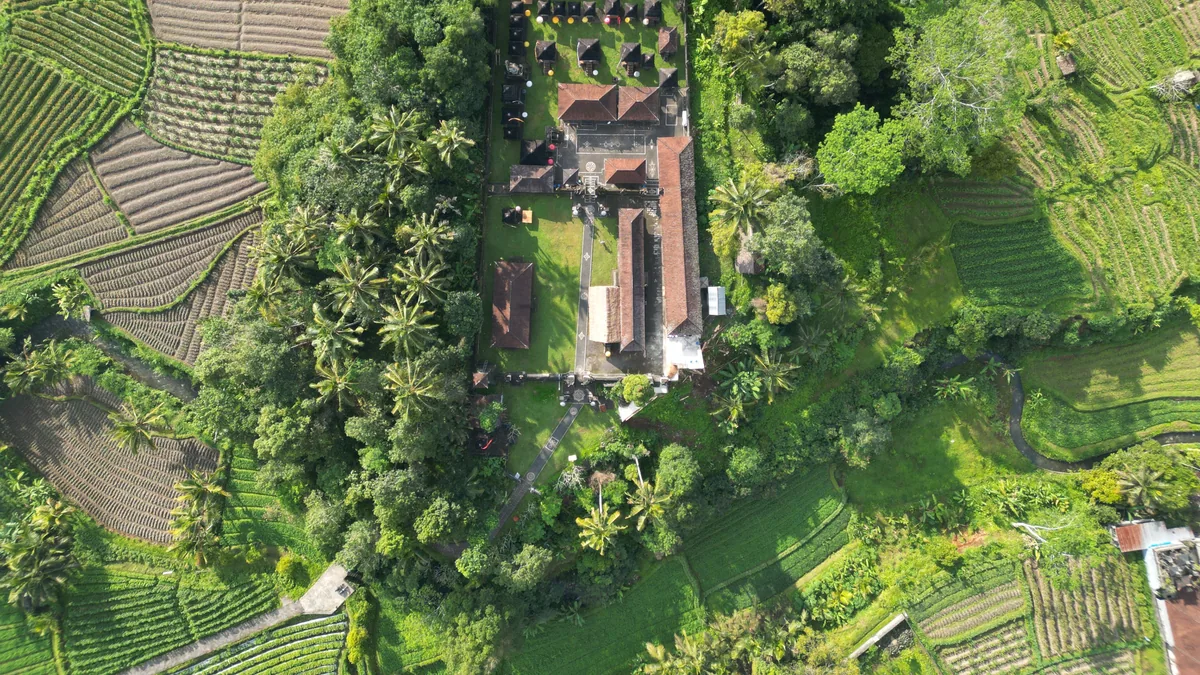
Travelling soon? Browse Indonesia eSIM plans and arrive connected.
An eSIM works well across most of Indonesia, and an eSIM Indonesia plan installed before you fly will usually connect within a minute of landing at Ngurah Rai or Soekarno-Hatta. The catch is geography: coverage is excellent in Bali and Java, decent in the larger cities of Sumatra and Sulawesi, and genuinely patchy in places like Raja Ampat and the interior of Flores.
This guide covers which networks carry your data, how much Indonesia travel data a typical trip actually uses, whether to set up before departure or on arrival, and how the cost compares with buying a local SIM at the airport.
An eSIM (embedded SIM) is a digital SIM profile you install by scanning a QR (Quick Response) code, so you arrive in Indonesia with mobile data already working. It roams on Indonesian networks such as Telkomsel and Indosat, keeps your home number active for verification codes, and avoids the ID registration and IMEI paperwork attached to local prepaid SIMs.
How we built this eSIM Indonesia guide
Indonesia is 17,000 islands across three time zones, so a national statement about coverage is close to meaningless. Here is where the claims below come from.
- Coverage comes from the regulator and the operators' published build-out. Indonesia's communications ministry reports network deployment by province, which is why the gaps named below are specific islands and specific roads.
- Data figures come from our own activation records, grouped by itinerary. A Bali fortnight, a Java overland route and a Komodo or Raja Ampat boat trip consume very different amounts of Indonesia travel data.
- We name competitors and omit their prices on purpose. Indonesian domestic data is among the cheapest in Asia and travel eSIM pricing moves constantly, so you get the shape of each option and an instruction to check the live figure.
- The IMEI rule gets a section of its own. It is the single most Indonesia-specific fact about mobile data here, it catches travellers out every week, and most guides mention it in half a sentence.
- Nothing here is a fabricated travel story. Where this guide names a place — an airport, a ferry route, a dive site — it is describing verifiable geography and published rules.
Last checked: September 2026.
eSIM Indonesia coverage: who actually carries your data
Indonesia has three main mobile network operators, and a travel eSIM Indonesia profile will roam onto one or more of them depending on the plan and the location.
Telkomsel is the largest by some distance and the state-linked operator. It has the widest reach outside the big islands — if you are heading to eastern Indonesia, remote Sumatra or small islands, Telkomsel is almost always the network with a bar of signal when nothing else has one.
Indosat Ooredoo Hutchison (the merged Indosat and Tri networks) is strong in Java, Bali and urban Sumatra, and often faster than Telkomsel in dense city areas because it is less congested in some districts.
XL Axiata, now operating under the XLSmart banner following its merger with Smartfren, is competitive in Java, Bali and major cities but thinner in rural areas.
4G LTE is the workhorse across the country. 5G exists but is limited to parts of Jakarta, Surabaya, Bandung, Medan, Makassar, Batam and southern Bali — treat it as a bonus rather than something to plan around.
Bali and Java
This is where an eSIM Indonesia plan is at its best. Expect reliable 4G in Denpasar, Seminyak, Canggu, Ubud, Uluwatu and Sanur, and across Jakarta, Bandung, Yogyakarta, Semarang, Solo and Surabaya.
Speeds are usually enough for video calls and map navigation. Congestion is the real limiter, not coverage: mid-evening in Canggu, or during the daily rush around Jakarta's ring road, throughput can drop noticeably.
Rice-terrace areas north of Ubud, the road up to Mount Batur and the trail heads at Bromo and Ijen have coverage that fades in and out. It comes back as soon as you return to the main road.
Sumatra, Sulawesi and Lombok
Cities are fine. Medan, Padang, Palembang, Makassar and Manado all have solid 4G, as does Mataram on Lombok and the built-up areas around Senggigi and Kuta Lombok.
Between cities, expect gaps. The drive from Medan to Lake Toba, the roads through Tana Toraja and the north Lombok coast all have dead stretches of ten to thirty minutes. Download offline maps before you set off — this is the single most useful preparation for Indonesian road travel.
The islands where coverage genuinely thins out
Some places are simply not well covered, and no eSIM or local SIM changes that:
- Gili Trawangan, Meno and Air — usable but slow, and Meno in particular can be near-unusable at peak times.
- Nusa Penida — good near Toyapakeh and Crystal Bay, unreliable on the west-coast cliff roads.
- Komodo National Park and the boat routes from Labuan Bajo — Labuan Bajo town is fine, the park itself mostly is not.
- Raja Ampat — Waisai has signal; most homestays on the smaller islands have little or none. Plan for offline days.
- The Mentawai Islands and inland Papua — assume no data at all.
If you are booking a liveaboard or a multi-day boat trip in Komodo or Raja Ampat, tell someone at home your expected return date before you board. Crews often have satellite messaging, but you will not.
How much Indonesia travel data you actually need
Most travellers overbuy Indonesia travel data. Indonesian trips lean heavily on Google Maps, WhatsApp, Grab and Gojek, all of which are light on data. Video streaming is what pushes usage up.
Rough guides for a two-week trip:
- Light use — maps, messaging, ride-hailing, occasional browsing: 3–5 GB.
- Typical use — the above plus social media, photo uploads and some music streaming: 8–12 GB.
- Heavy use — daily video calls, uploading footage, tethering a laptop for a few hours a day: 20 GB or more.
Two practical adjustments to your Indonesia travel data. First, Grab and Gojek both refresh maps constantly while you wait for a driver, which adds up over dozens of rides. Second, most Bali accommodation has usable Wi-Fi, so if you are based in one villa for a week your mobile usage will be lower than you expect.
If you are working remotely from Bali for a month, budget Indonesia travel data generously and check whether your plan allows hotspot use. Villa Wi-Fi in Canggu and Ubud is frequently unreliable during afternoon storms, and a mobile connection ends up being the backup that actually gets you through a client call — the same pattern we describe for remote workers keeping a second connection ready.
The IMEI rule, SIM registration, and why an eSIM Indonesia plan skips both
Indonesia has two pieces of regulation that make buying a local SIM harder than it looks, and understanding them is the strongest practical argument for a travel profile.
The IMEI registration rule. Since 2020 Indonesia has operated a device identity register. A handset brought in from abroad and used with an Indonesian SIM must have its IMEI registered with customs, and phones that are not registered lose local network access after a grace period. Tourists are entitled to a temporary registration on arrival, done at a customs desk at the airport, but it is a queue, a form and a window of validity. The rule attaches to the pairing of a foreign device with a domestic subscription — which is exactly what a travel eSIM Indonesia plan does not create, because the profile connects as an inbound roamer on an agreement your provider already holds.
Prepaid SIM registration. Separately, every Indonesian prepaid number must be registered against an identity document. For residents this means a national ID card; for visitors, shops register the card against a passport, which they will do, but which takes time and varies in how rigorously it is applied. An unregistered card stops working.
The Bali airport problem. Ngurah Rai has a long-standing reputation for aggressive SIM selling at arrivals — inflated prices, cards sold as larger bundles than they are, and occasional registration that never actually completes. Buying in a Telkomsel or Indosat store in Kuta, Seminyak or Ubud rather than in the terminal solves this, but it means arriving with no data.
What this adds up to. A local chip is genuinely cheaper per gigabyte — Indonesian data is inexpensive by any standard. What you pay for it is a customs desk, a registration counter and a first afternoon spent on administration. An eSIM in Indonesia removes all three and costs more per gigabyte. For a two-week trip that trade is easy; for a three-month stay in Canggu it is not.
eSIM Indonesia plans versus the local alternatives
Here is how the alternatives to an eSIM in Indonesia compare for a visitor staying between one and four weeks.
| Option | Ready before you fly | ID or registration needed | Relative cost | Coverage | Best for |
|---|---|---|---|---|---|
| Travel eSIM | Yes — install at home, activate on landing | None beyond your account | Low to moderate per GB | Roams on major Indonesian networks | Most travellers, 3 days to 1 month |
| Local prepaid SIM (Telkomsel, Indosat) | No — buy on arrival | Passport registration, plus IMEI (International Mobile Equipment Identity) rules for extended use | Lowest per GB | Best, especially remote areas | Long stays of a month or more |
| Home carrier roaming | Yes | None | Highest by a wide margin | Same networks, via roaming agreement | Very short trips where cost is irrelevant |
| Pocket Wi-Fi rental | Book ahead, collect on arrival | Deposit and ID | Moderate, plus a device to carry and charge | Depends on rental network | Groups sharing one connection |
| Hotel and café Wi-Fi only | N/A | None | Free | Fine in cities, poor elsewhere | Budget travellers who stay put |
Indonesia has some of the cheapest mobile data in Asia on a per-gigabyte basis, so a local SIM does win on raw price. What it costs you is time and friction: queueing at an official outlet, presenting your passport, and dealing with the country's IMEI registration rules if you plan to use a foreign-bought handset with an Indonesian subscription for an extended period.
There is also a well-known problem at Bali's Ngurah Rai airport, where unofficial counters in the arrivals area sell tourist packages at several times the shop price. If you go the local route, use an official Telkomsel GraPARI outlet or an authorised Indosat store in town rather than the first desk you see.
A travel eSIM Indonesia profile sidesteps all of that because it connects as a roaming device on an international profile. If you want the broader arithmetic on this, our breakdown of eSIM costs against carrier roaming applies to Indonesia as directly as anywhere.
Pros of using an eSIM in Indonesia
- Working data the moment you clear immigration, before you find an ATM or a taxi.
- Your home number stays active on the physical SIM for bank one-time passcodes.
- No passport registration, no IMEI paperwork, no airport counter haggling.
- Easy to top up or switch plans mid-trip from your phone.
Cons
- Per-gigabyte cost is higher than an Indonesian local SIM bought in town.
- Most travel eSIMs are data-only — no Indonesian phone number for local calls or SMS.
- Roaming profiles occasionally deprioritise you on a congested cell versus a local subscriber.
- Requires an eSIM-compatible, carrier-unlocked phone.
Get your Indonesia eSIMStay connected throughout Indonesia — instant activation, no roaming bill.
Explore Indonesia data plans — activation takes a couple of minutes.
Setting up your travel eSIM Indonesia line before departure
Install the eSIM Indonesia profile before you fly. Almost every problem travellers report comes from trying to install after landing, when they need the very connection they are trying to create.
The installation needs Wi-Fi or an existing data connection to download the profile. Once installed, the profile sits dormant on your phone until it detects an Indonesian network.
- Check compatibility first. Most flagship phones from 2018 onwards support eSIM, including iPhone XS and later, Google Pixel 3 and later, and Samsung Galaxy S20 and later. Confirm your exact model on our list of eSIM-compatible handsets and make sure the phone is carrier-unlocked.
- Buy and install at home, on Wi-Fi. You will receive a QR code by email. On iPhone go to Settings → Mobile Service → Add eSIM → Use QR Code. On Android, Settings → Network & internet → SIMs → Add eSIM.
- Label the profile. Name it something like "Indonesia" so you can tell it apart from your home line in the settings menu.
- Leave it switched off until you land. Most plans start counting validity from first connection to a network, not from purchase.
- On arrival, turn on data roaming for the Indonesia profile only. This is the step people miss. Settings → Mobile Service → select the Indonesia eSIM → Data Roaming → on.
- Set your default line. Choose the eSIM for mobile data and keep your home number for calls and texts, so verification codes still reach you.
- Restart if nothing appears within two or three minutes. A restart resolves the majority of first-connection issues; our eSIM troubleshooting walkthrough covers the rest.
If you have never installed one before, the step-by-step installation guide shows each menu path with screenshots.
APN (Access Point Name) settings are normally applied automatically. If data does not flow after a restart, check that the APN field for your Indonesia profile matches the value in your activation email rather than being blank.

The eSIM Indonesia provider landscape, honestly
We name the alternatives and describe how each one is built; we do not publish prices, which move constantly and would be wrong by the time you read this.
The large marketplaces. Airalo and Nomad resell wholesale roaming capacity worldwide. Breadth is the appeal — Indonesia plus Singapore, Malaysia and Thailand in one app. The trade-off is limited visibility of whether you land on Telkomsel, Indosat or XL, which matters here more than in most countries: Telkomsel has substantially the widest reach outside Java and Bali.
The unlimited-data specialists. Holafly sells daily unlimited plans. Read the fair-use terms: unlimited almost always means full speed to a daily threshold then throttling, and tethering is frequently restricted — which matters if you are working remotely from Bali.
The carrier-backed options. Ubigi runs on Transatel, owned by NTT Docomo, and Saily comes from the Nord Security group. Both are clearer about the underlying network and allow in-app top-ups, useful when the next proper phone shop is a ferry away.
The Indonesian operators. Telkomsel has the national footprint and is the one to want if your route includes Sumatra, Sulawesi, Flores or Lombok. Indosat Ooredoo Hutchison and XL Axiata are strong on Java and Bali and thinner elsewhere. Their tourist packages are cheap and generous — the obstacles are the two rules described above, not the price.
What actually separates them. Which network the plan rides on is the first question in Indonesia, not the last. After that: tethering permission, and whether you can top up mid-trip without a new profile. A Indonesia eSIM buys you the removal of customs and registration paperwork; decide whether that is worth the premium for your trip length.
Competitor details last checked: September 2026.
When an eSIM in Indonesia is not the right choice
Honest answer: there are three situations where you should do something else.
A short layover. If you are transiting through Jakarta or Denpasar for six hours and never leaving the terminal, airport Wi-Fi is enough. Both major airports have free networks that work well enough for messaging.
A long stay. Living in Bali for three months on a social visa? Register a Telkomsel or Indosat prepaid line at a GraPARI or authorised outlet with your passport, handle the IMEI registration through customs, and pay local rates. The per-gigabyte saving over that timeframe is substantial, and you get an Indonesian number for deliveries and bookings.
A phone that does not support eSIM. Older handsets, some regional model variants and many carrier-locked devices simply cannot install one. Buy a physical local SIM instead — it works perfectly well, it just takes twenty minutes of your first afternoon.
For everyone else — a two-week Bali and Java trip, a three-week island loop, a week of meetings in Jakarta — an eSIM is the option with the least friction. Atlas eSIM plans for Indonesia are activated by scanning a QR code and cover the main networks across Java, Bali, Sumatra and Sulawesi, with the flexibility to top up if you underestimate.
Travellers combining Indonesia with a neighbouring country often pair it with a separate profile for the next leg; our Thailand connectivity guide covers that side of the region.
Pre-departure checklist
- Confirm your phone supports eSIM and is carrier-unlocked
- Install the eSIM profile at home while on Wi-Fi
- Label the profile clearly in your phone settings
- Download offline Google Maps for Bali, Java and any island you are visiting
- Install Grab and Gojek before you fly — both need verification during signup
- Save your accommodation addresses in Indonesian, not just in English
- Note your eSIM provider's support contact somewhere accessible offline
- Pack a power bank — ride-hailing and maps drain a battery fast in humid heat
eSIM Indonesia: frequently asked questions
Does an eSIM work at Bali airport straight away?
Yes, in almost all cases. Provided you installed the profile before you flew and switch on data roaming for it after landing at Ngurah Rai, you should have a connection before you reach the immigration queue. Allow a couple of minutes and a restart if it does not connect immediately.
Do I need to register my passport for a travel eSIM in Indonesia?
No. Indonesia's prepaid SIM registration rules and IMEI requirements apply to locally issued subscriptions, not to roaming profiles from an international provider. You register nothing on arrival and carry no extra paperwork.
Will I get an Indonesian phone number?
Most travel eSIMs are data-only, so no. This is rarely a problem because WhatsApp is the default communication channel across Indonesia and works over data, but if you need a local number for bank verification or a long-term rental, buy a local prepaid SIM as well.
Is there coverage on the Gili Islands and Nusa Penida?
Partially. Gili Trawangan and the main areas of Nusa Penida have workable 4G, while Gili Meno and Nusa Penida's western cliffs are unreliable. Download maps and booking confirmations before you take the boat across.
Can I use my eSIM as a hotspot for a laptop?
Usually yes, though it depends on the plan — check before you buy if you intend to work from Indonesia. Tethering consumes data far faster than phone use, so size your plan accordingly. Full guidance on how the technology works is in our explainer on eSIM basics.
Do I need to register my phone's IMEI with an eSIM in Indonesia?
No. The IMEI registration requirement applies to foreign handsets used with an Indonesian SIM subscription. A travel eSIM connects as an inbound roamer, so there is no domestic subscription to pair with your device and nothing to declare at customs. This is the single most useful practical difference between the two routes.
Which network should an eSIM Indonesia plan connect to?
Telkomsel if your route leaves Java and Bali. Its reach across Sumatra, Sulawesi, Nusa Tenggara and Papua is materially better than the alternatives, and outside the main islands that is the difference between a usable connection and none. On Bali and in Jakarta all three are fine.
How much Indonesia travel data does two weeks actually use?
Four to eight gigabytes for most itineraries. Grab and Gojek refresh maps continuously and are the main draw; photograph and video upload is the second. A Bali stay leaning on villa and café Wi-Fi sits lower, and an island-hopping route sits higher because the Wi-Fi disappears on travel days.
Will my eSIM work on Komodo, Flores and Raja Ampat?
In the main towns — Labuan Bajo, Maumere, Sorong, Waisai — yes. On the boats, at the dive sites and across most of the national park, no. Liveaboards are offline by design. Treat any multi-day boat trip as having no connectivity and download everything before you board.
Can one eSIM cover Indonesia, Singapore and Malaysia?
Only with a regional Asia plan. A country profile stops at the border, which matters on the common Singapore-to-Bali and Kuala-Lumpur-to-Jakarta routings. If more than one country is in the itinerary, buy regional at the outset.
Does a travel eSIM Indonesia plan give me an Indonesian number?
Almost never — these are data-only profiles. Your home number stays reachable for calls and SMS, which keeps bank verification codes arriving. Grab and Gojek both accept a foreign number at signup, so set them up before you travel rather than after you land.
Still choosing a provider? Our comparison of the best eSIM plans for Indonesia is the page to read — and it is worth reading precisely because Indonesia is the country most often left out of regional bundles sold as "South-East Asia".
Pick your Indonesia data plan in a few taps.
Before you go
Three things make the biggest difference to staying connected in Indonesia. Download offline maps for every island on your route, because the coverage gaps are between towns rather than in them. Keep your home number active alongside your data profile so banking codes still arrive. And decide your data allowance based on how much you will stream, not how many days you are away.
For current UK government entry and safety information, check the Foreign, Commonwealth & Development Office advice for Indonesia before booking, and see the GSMA for background on how eSIM technology is standardised worldwide.
If you would rather land in Denpasar or Jakarta with data already running, Atlas eSIM covers Indonesia with plans from a few days upwards, installable before you leave home.
Ready to stay connected? Choose your Indonesia eSIM.


 Destination guide

 Destination guide

 Destination guide